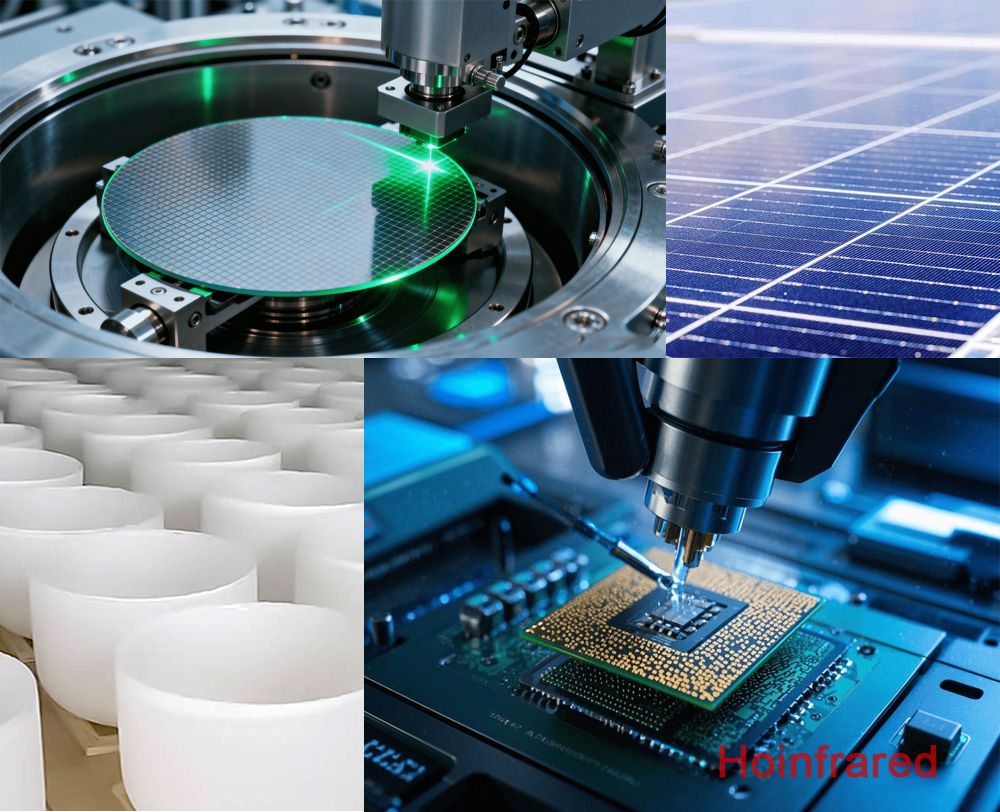
Due to its excellent optical, thermal, and electrical properties, high-purity quartz plays an irreplaceable role in fields such as semiconductors, optical fiber communications, photovoltaics, and aerospace. In the semiconductor industry, quartz crucibles are key components in the production of monocrystalline silicon. Quartz crucibles are used to hold molten polycrystalline silicon feedstock and pull it into monocrystalline silicon rods at high temperatures. Given the extremely high purity requirements for silicon wafers, quartz crucibles must be made of high-purity quartz, with a purity generally reaching 99.999% (5N) or higher, and in some high-end applications, even 99.9999% (6N). If the impurity content in the quartz crucible is too high, the impurities will diffuse into the silicon melt at high temperatures, leading to a decline in the electrical performance of the monocrystalline silicon rods and affecting the quality and performance of the chips. In the wafer manufacturing process, high-purity quartz is used to make quartz glass diffusion tubes, quartz boats, quartz glass furnace tubes, and other equipment. These devices are used to carry and transport wafers during high-temperature diffusion, ion implantation, and other processes, ensuring precise process control and wafer quality. For example, in the diffusion process, quartz glass diffusion tubes need to have good high-temperature resistance and chemical stability to ensure that the doping gas diffuses uniformly into the wafers at high temperatures. In chip manufacturing processes such as lithography, etching, and thin film deposition, high-purity quartz also plays a crucial role. The substrate for photomasks used in lithography is typically made of high-purity quartz glass, and its high-precision flatness and optical properties are essential for ensuring the accuracy of the lithography patterns. In the etching process, high-purity quartz-made reaction chambers can provide a stable chemical environment to achieve precise etching of the chip surface materials. In thin film deposition processes, high-purity quartz can be used as a substrate material, influencing the growth quality and performance of the films.
In the photovoltaic industry, quartz crucibles are also core components in the production of photovoltaic monocrystalline silicon. With the rapid development of the photovoltaic industry, the demand for quartz crucibles is increasing, and higher requirements are being placed on their quality and performance. Large-sized, high-purity, and long-life quartz crucibles have become the mainstream demand in the market. For example, during the transition from P-type to N-type photovoltaic cell modules, the N-type process requires more stringent purity and stability of quartz crucibles to ensure the production of high-quality N-type monocrystalline silicon wafers and improve the conversion efficiency of photovoltaic cells. High-purity quartz can also be used to manufacture photovoltaic glass, enhancing its light transmittance and weather resistance. As the encapsulation material for solar cell modules, photovoltaic glass needs to have good optical and mechanical properties to ensure that sunlight can be efficiently transmitted and converted into electricity, while protecting the cells from environmental erosion. The application of high-purity quartz helps improve the quality and performance of photovoltaic glass and reduce the cost of photovoltaic power generation.
In the manufacturing of optical fibers, high-purity quartz is the main raw material for making optical fiber preforms. Optical fiber preforms are key intermediates in the production of optical fibers, and their quality directly affects the performance of the fibers. During the manufacturing of optical fiber preforms, extremely high purity and low impurity content of high-purity quartz are required. For instance, hydroxyl groups (-OH) in quartz can cause additional attenuation in optical fibers during transmission, and transition metal ions (such as iron and copper) can increase fiber loss, and in severe cases, lead to signal distortion. Therefore, high-purity quartz used for making optical fiber preforms must undergo strict purification and testing to ensure extremely low impurity levels. During the optical fiber drawing process, components made of high-purity quartz in the drawing furnace can provide a stable high-temperature environment, ensuring the quality and stability of the optical fiber drawing. Additionally, the low friction coefficient and good thermal stability of high-purity quartz help increase the speed and efficiency of optical fiber drawing and reduce production costs.
In the aerospace field, high-purity quartz glass is often used as an optical window material. For instance, in satellite earth observation cameras, astronomical telescopes and other equipment, high-purity quartz glass can provide high transmittance and good optical uniformity, ensuring clear image acquisition and observation. Meanwhile, high-purity quartz glass also has excellent radiation resistance, enabling stable operation in cosmic ray environments and protecting optical devices from radiation damage. High-purity quartz can be used to manufacture sensor components in the aerospace field, such as accelerometers and gyroscopes. Due to its extremely low coefficient of thermal expansion and good mechanical properties, sensors made of high-purity quartz can maintain high-precision measurement performance in extreme temperatures and complex vibration environments, providing reliable data support for navigation and control systems of aircraft. When spacecraft re-enter the atmosphere, they will encounter extremely high temperature environments. High-purity quartz fiber-reinforced composite materials can be used as thermal protection materials to manufacture the thermal protection shells and leading edges of wings of spacecraft. This material has low density, high specific strength, good high-temperature resistance and thermal shock resistance, effectively protecting the internal structure and equipment of spacecraft from high-temperature erosion.
With the rise of emerging industries such as 5G communication, artificial intelligence and new energy vehicles, the demand for high-purity quartz has shown explosive growth. In the semiconductor field, as chip manufacturing processes continue to advance towards smaller scales, the requirements for the purity and precision of high-purity quartz are becoming increasingly strict. The demand for high-purity quartz materials used in manufacturing key components of photolithography equipment and wafer carriers is continuously increasing. In the photovoltaic industry, to improve the photoelectric conversion efficiency, the quality and performance requirements for high-purity quartz crucibles in the production of monocrystalline silicon have increased, promoting a steady growth in demand. In the field of optical fiber communication, with the increasing demand for network bandwidth expansion, the demand for high-purity quartz-made optical fiber preforms is strong, driving the continuous expansion of the high-purity quartz market. Despite some challenges at present, the high-purity quartz industry in China is expected to thrive and have a bright future.
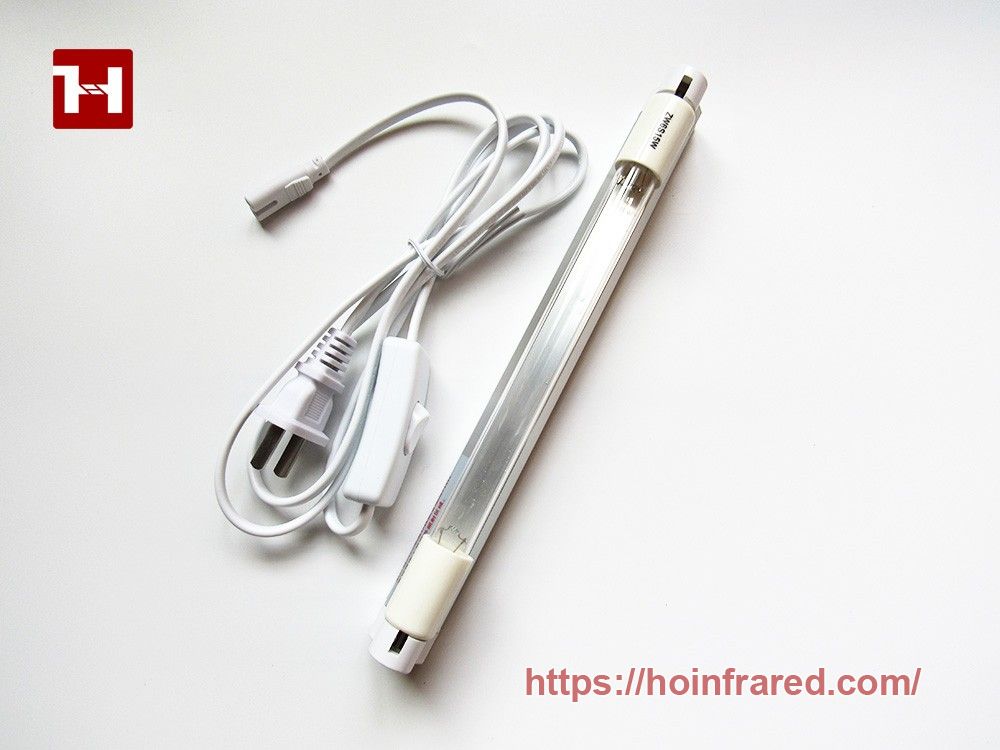
4W~8W Ultraviolet Ozone Tube with Lamp StandWattage : 4W/8WSize: φ15.5mm*T5*136mm/288mmArea: 4 Square meter/8 Square meter Notice:UVC Ray is harmful to eye......